Nature Therapy: Simple Ways to Find Calm Outdoors
There’s a thing that happens a few minutes into being under trees. That shift is the quiet center of nature therapy.
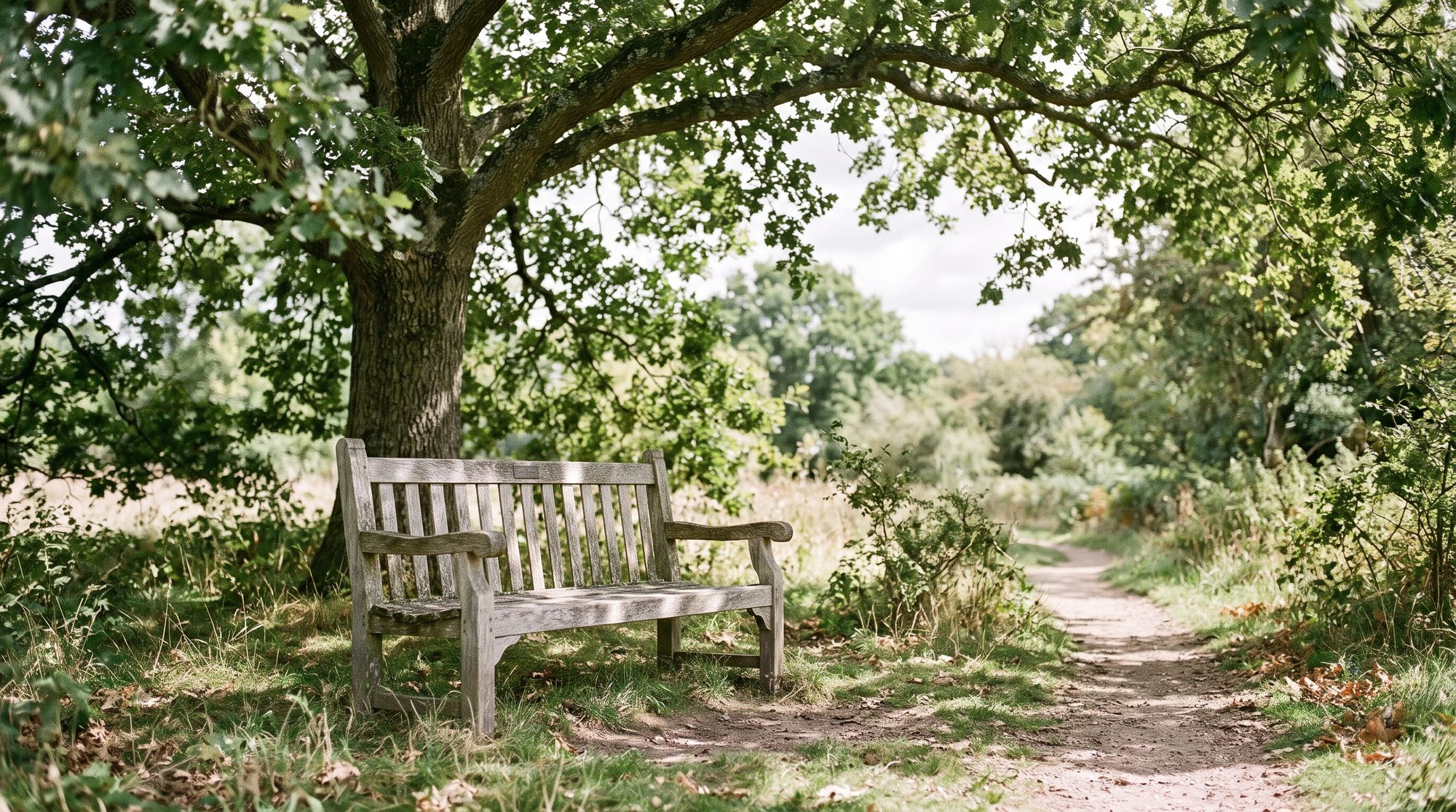
You didn’t plan it. You were just walking, or sitting on the bench because the bench was there — and somewhere between one breath and another, the shoulders came down. The mental tab-count dropped. The world got quieter without getting emptier.
Every culture has always known this, and in recent decades the research caught up: time in green space is reliably linked with lower stress hormones, gentler blood pressure, better mood, and a calmer nervous system overall. The Japanese practice of shinrin-yoku — forest bathing — turned it into a formal prescription. But here’s the kind part: the effective dose is small, the technique is nearly nothing, and the forest is optional. A park works. A yard works. One tree, honestly, works.
Why Nature Therapy Works (the Short Version)
Nature asks the attention system for a different kind of work. Screens and streets demand directed attention — focused, effortful, depleting. Leaves moving, water sounds, and clouds invite what researchers call soft fascination: attention that rests while still engaged. It’s the difference between gripping and holding — and it’s why twenty minutes outside leaves the mind refilled in a way twenty minutes of scrolling never has. This is the core of nature therapy: attention that rests instead of strains.
Add the physical layer — natural light regulating the body clock, slower walking pace, air that isn’t indoor air — and “go outside” stops being folk advice and starts being one of the most evidence-backed calming tools available. Studies suggest around twenty minutes is where stress markers drop measurably; two hours a week, in any-sized pieces, is where wellbeing effects show up. Pieces count. It all counts. Light also shapes sleep, and The Connection Between Sleep and Emotional Wellbeing explores how closely rest and mood are tied.
Forest Bathing, Minus the Mystique
Shinrin-yoku sounds elaborate. It isn’t. The whole practice: go where there are trees, slow down far below errand-pace, and let the senses do the work — no destination, no step count, no phone if you can manage it. In other words, it is nature therapy at walking pace.
A simple shape for a first try, twenty minutes: walk slowly for a few of them, then stop wherever something catches you — a patch of light, one particular tree. Spend a minute per sense: what’s actually here to see (not scanning — resting on things), to hear (layers under the obvious), to smell, to feel (air on skin, ground under feet). Then just be there a while. Boredom may visit first; it’s the doorway, not the verdict. What’s on the other side of it is the quiet you came for.
Grounding: The Barefoot Minute
Grounding — skin contact with the actual earth — comes in two flavors, and both are useful. For more ways to come back to the present moment, see Grounding: Simple Techniques to Bring You Back to the Present Moment.
The practical flavor: bare feet on grass, sand, or soil for a few minutes is a strong sensory anchor. Cool, textured, slightly novel — it pulls attention out of the mental churn and into the soles of the feet, which is the whole trick of every grounding technique, delivered here by the ground itself.
The gentle-ritual flavor: hands in garden soil, back against a tree trunk, palm flat on a sun-warmed rock. Whatever the claims and counterclaims about mechanisms, the felt experience is consistent: contact with earth-things settles people. A minute counts. Sixty seconds of grass under bare feet while the coffee brews is a complete practice.
Nature for Sensory-Sensitive Bodies
Not every nervous system experiences the outdoors as automatically soothing, and it’s worth saying so plainly. Bright sun, unpredictable insects, wind noise, or the texture of grass underfoot can read as sensory input to manage rather than sensory input to enjoy — especially for people whose systems are already working overtime to process the world. If that sounds familiar, building a personal sensory reset kit can make outings feel safer to try.
None of that disqualifies you from nature therapy. It just changes the dose and the setting. A shaded spot instead of open sun. Sunglasses and a hat as standing equipment, not a concession. A porch or balcony that offers green and air without the unpredictability of an open trail. Even a short window of early morning or late evening, when insects are fewer and light is gentler, can turn an overwhelming outdoor hour into a genuinely restful ten minutes.
The goal was never “tolerate the outdoors at full intensity.” It’s finding the version of outside that your particular system can actually receive as calming rather than as one more thing to filter. That version exists for nearly everyone — it just might look smaller, shadier, or more curated than the postcard image of nature therapy.
Bringing a Journal Outside (or Bringing Nature to the Journal)
Pairing time outdoors with a few written lines gives the nervous system two regulating inputs at once, and neither needs to be elaborate. A small notebook on a bench, five minutes, one line about what the senses picked up: the specific color of the light, a sound that repeated, the temperature of the air on skin. Sensory description, not analysis — noticing is the whole assignment. If writing is new to you, How to Start Journaling for Beginners: A Gentle 5-Minute Daily Practice covers the basics without pressure.
On days the actual outdoors isn’t accessible, the reverse works too: journaling toward nature from indoors. A few lines imagining a specific outdoor memory in detail, or simply naming what’s visible through the nearest window, gives a starved sensory system a small dose of the same soft-fascination effect real trees provide. It’s a smaller effect than the real thing, but a real one — the mind doesn’t always distinguish sharply between vividly recalled nature and freshly observed nature when it comes to the settling response.
Doses for Real Lives (Including Winter, Including Tired)
The all-or-nothing trap — real nature requires a trailhead — keeps people indoors. The workable version is dose-flexible: Nature therapy works in small, regular doses far more than in rare big trips.
The ten-minute sit. A bench, a stoop, a parked car with the windows down facing anything green. No walking required.
The threshold habit. Morning drink taken outside, or at a fully open window. Two minutes of actual sky before the screens get you.
The ordinary walk, re-labeled. The walk you already take — to the bus, with the dog — done once a day at half speed, senses on. Same route, different practice.
The winter version. Bundled, brief, and still real: cold air is vivid air, bare trees are still trees, and ten minutes of gray daylight beats none for the body clock. Nature therapy has no weather requirements, only clothing ones. If darker months bring a heavier low mood, the National Institute of Mental Health explains seasonal affective disorder and when to talk to a professional.
The bring-it-in version. For the truly housebound days: window views of green (genuinely studied, genuinely helpful), plants tended on a sill, even recorded rain and birdsong. Smaller effect, real effect.
Nature in the Company of Others (When Solo Isn’t the Only Option)
Most nature-therapy advice defaults to solitary time outdoors, which fits some people perfectly and misses others entirely. Time outside with a friend, a child, or a dog changes the flavor of the practice without changing its effectiveness — the soft fascination of moving trees and open sky works whether you’re alone or in quiet company.
A shared walk with no destination and minimal talking can deliver much of the same regulating effect as a solo one, plus the added benefit of co-regulation layered on top. If solitude feels lonely rather than restful on a given day, invite someone along, or simply sit near a park bench where other people are also quietly existing. The trees don’t require privacy to work. Quiet company like this is a form of co-regulation, which Co-Regulation Is Not Weakness: Why Connection Calms the ND Nervous System describes in more depth.
A Few Micro-Steps (Pick One, Not All)
- Take tomorrow’s first drink outside or to an open window. Two minutes of sky.
- Find your one bench — the green-facing spot within five minutes of home — and sit on it this week.
- Try sixty seconds of bare feet on grass and notice what the churn does.
- Re-label one existing walk: half speed, senses on, phone pocketed.
A Few Prompts for After Time Outside
If you’d like to carry the outdoor calm a little further, a few lines afterward can help it settle in rather than evaporate the moment you’re back at a screen:
- What did I actually notice out there — one sound, one color, one texture?
- What in my body feels different now than it did twenty minutes ago?
- What’s the smallest version of this I could do again tomorrow?
The Door Was Always Open
Nature doesn’t require you to be outdoorsy, fit, or free on weekends. It asks almost nothing — some minutes, some slowness — and offers back one of the oldest regulating forces there is. The trees have been doing this for everyone, forever. You’re allowed to go get your share. Nature therapy is simply the habit of letting the living world help carry some of the load.
A question to sit with, if you’d like one: What’s the nearest green thing to my front door — and what would it take to visit it three times this week?
And if a small companion would help, the Eden’s Corner shop — gentle prompts and printable tools for days like this — lives quietly on Etsy and Gumroad. No pressure and no timeline attached — it’ll be there whenever you’re ready.