When the Day Goes Sideways and You Have Nothing Left
You know the feeling, even if you don’t have words for it yet.
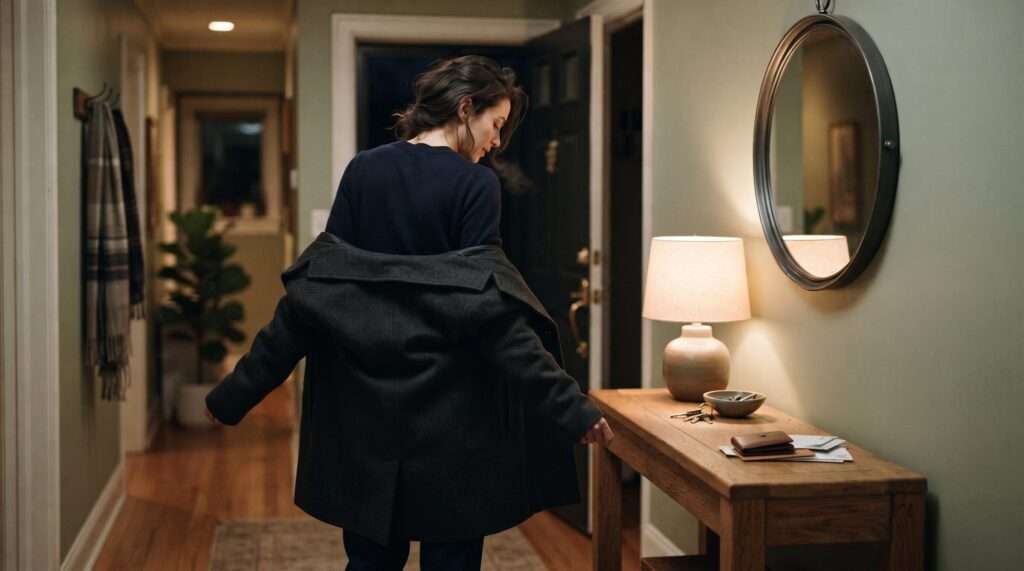
The day began, and you did what you always do. You moved through the hours — responding, deciding, showing up for the people and the tasks that needed you. This is a sideways day: nothing dramatic happened, but at some point, you noticed it. The subtle shift. The way your chest feels a little tighter. The way your thoughts are moving faster than your body can keep up with. The way you’re still doing all the things, but you’re no longer quite in them.
Nothing terrible had to happen. No big breakdown. Just the slow accumulation of ordinary demands until you feel yourself running thin.
This isn’t a failure of resilience. It’s information. Your system is letting you know that something needs attention — even if that attention is simply the choice to pause for a moment and notice what’s already true.
The Body Often Knows Before We Do
We spend so much of our days in our heads. Planning the next step. Replaying the last conversation. Worrying about how we’re being perceived. And all the while, the body is doing its quiet work of holding everything we haven’t had time to feel.
The tension we carry in our shoulders. The breath that stays shallow because stopping to take a full one would mean acknowledging how tired we are. The way we brace, unconsciously, for the next thing on the list.
What if we let the body speak first, without rushing to translate or fix what it’s saying?
You might place a hand on your chest or your stomach and simply ask, in the privacy of your own mind: What does my body feel like right now?
You don’t need three eloquent words. “Tired” counts. “Tight” counts. “I don’t know” counts too.
Or notice the temperature of this moment — not the weather, but the literal sensation on your skin. Are you warm? Cold? Somewhere in between?
These small questions bypass the part of us that wants to analyze everything. They just invite us back into the present, one sensation at a time.
You don’t have to do anything with what you notice. The noticing itself is the return.
Why Sideways Days Feel Harder to Explain
There’s a particular kind of frustration that comes with a day like this — the sense that you can’t quite point to what went wrong. If something dramatic had happened, you might feel entitled to be upset. But when it’s just an accumulation of small frictions — a delayed reply, a spilled cup of coffee, a comment that landed wrong, a to-do list that grew instead of shrank — it can feel almost embarrassing to admit how heavy it’s sitting.
That embarrassment isn’t necessary. Difficulty doesn’t need a dramatic cause to be real. Your nervous system doesn’t rank stressors by how impressive they’d sound if you explained them to someone else. It just registers load, and today the load added up. You’re allowed to feel undone by a day that, on paper, looks unremarkable. The paper isn’t the whole story. Your body is.
What We’re Still Carrying
Some of the weight we feel at the end of a sideways day isn’t even from today.
It’s the unfinished feeling from yesterday’s difficult conversation. The worry we absorbed from someone we love. The obligation we said yes to because we didn’t know how to say no without explaining ourselves. The belief that we should be further along by now, or more okay than we are.
We don’t have to unpack every bag we’re carrying. But sometimes it helps to gently ask: What am I still holding that I could set down, even for a little while?
It might be a resentment you’ve been nursing without realizing it. It might be the story that you’re the one who has to hold everything together. It might be the fear that if you stop pushing, everything will fall apart.
Naming it doesn’t mean you have to change it today. It just means you stop pretending it isn’t there. And that small honesty can make the load feel a little lighter.
The Needs That Don’t Require Justification
When we’re depleted, the question “What do I need?” can feel strangely difficult to answer. We’ve become so fluent in everyone else’s needs that our own can feel vague or inconvenient.
But needs are not inconveniences. They are information about what it takes for you to remain a person instead of a function.
You might wonder, without any pressure to follow through: What am I actually hungry for right now — not food, but experience? Connection, or solitude, or movement, or beauty, or simply the absence of demand.
Or: What does rest actually look like for me — not the idea of it, but the real thing? For some of us, true rest is lying down in a dark room. For others, it’s puttering in the garden or moving our bodies slowly. For others still, it’s doing absolutely nothing while the guilt tries to convince us we should be doing something else.
Whatever your version is, it is allowed. You don’t have to defend it. You don’t have to make it productive. You don’t have to wait until the work is finished.
A Short List for the Middle of a Hard Day
Sometimes it helps to have a few concrete options close at hand, for the moments when your thinking feels too scattered to come up with anything on your own. None of these are fixes. They’re just small doors back toward yourself.
You could step outside, even for sixty seconds, and let the air touch your face. You could drink a full glass of water slowly, paying attention to the temperature and the swallow. You could put on the one song that reliably makes your shoulders drop an inch. You could text one person the truth — “today has been a lot” — without adding an explanation or an apology after it. You could sit on the floor instead of a chair, just to change what your body is used to. You could close your eyes for ten seconds and do absolutely nothing else.
None of these need to be done in order. None of them are mandatory. They’re simply options, waiting for whichever one your body actually wants today.
When the Day Doesn’t Get Better, and That’s Allowed
Sometimes, despite every small return and every gentle noticing, the day just stays hard until it ends. Not every sideways day rights itself before bedtime. Not every heaviness lifts because you paid attention to it.
That’s not a sign that you did the noticing wrong. Attention doesn’t always change the shape of a feeling right away — sometimes it just changes your relationship to it, making it a little more bearable to carry until it naturally loosens on its own time. You’re allowed to go to bed still feeling off. You’re allowed to let a hard day simply end, without needing to resolve it into something tidier before you sleep. Tomorrow gets to be its own day, unrelated to whatever verdict today tried to hand you.
If Sideways Days Keep Stacking Up
One sideways day is manageable. A string of them, one after another, is a different kind of hard. If you’ve noticed that lately every day seems to tilt off-balance by mid-afternoon, it’s worth asking, gently, whether something bigger is being asked of your capacity than your capacity currently has to give.
That’s not a character flaw. It might mean a season of your life has more demands in it than usual — a new job, a health concern, a relationship in flux, a grief that hasn’t finished moving through you. It might mean your baseline has quietly shifted and hasn’t been given the chance to catch up. Either way, the pattern itself is information worth honoring, not evidence to argue yourself out of. You don’t have to solve the whole pattern today. You only have to notice it’s there, and let that noticing be the start of asking for more support, more rest, or more room than you’ve been giving yourself lately.
A Gentle Return
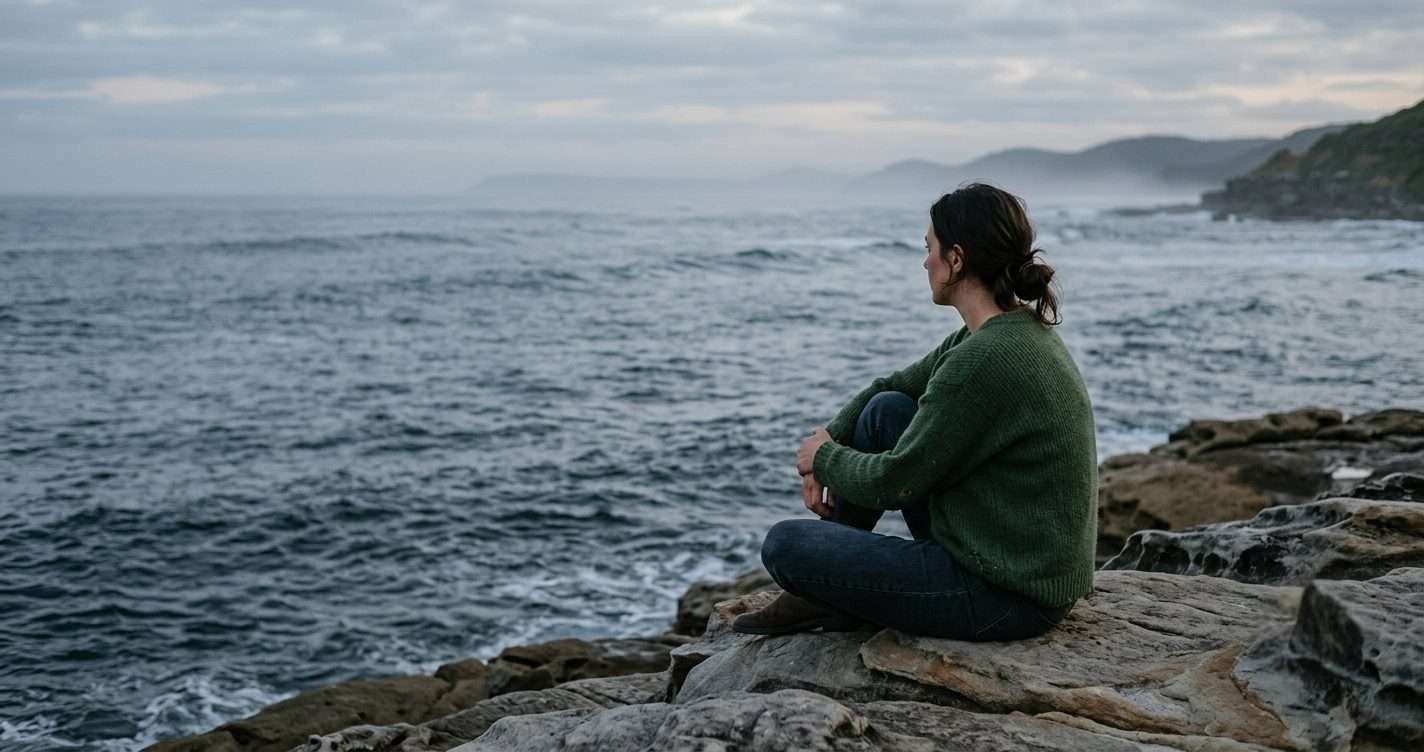
A return to yourself doesn’t require a whole new plan or a better attitude. It can be as small as one slower breath. As quiet as letting your jaw soften. As ordinary as acknowledging that you are tired and that your tiredness is real.
You are not behind. You are not failing at being a person. You are someone who has been navigating a day that asked more of you than you had in reserve. And you are allowed to pause — not because you’ve checked enough boxes, but because you are here.
The list will still be there when you come back. The sideways feeling may not vanish in an instant. But you will have remembered something important: that you are more than what you get done. That your body and your breath and your interior life are real. That you don’t have to earn the right to stop, even for two minutes.
That is the whole practice.
You are allowed to be here, right now, as you are.
If This Found You Gently
If these words offered a small moment of recognition or relief, Unload is a gentle brain-dump journal made for exactly the kind of day that leaves you carrying too much.